Wellness
September 28, 2026
Acne scars, rough skin texture, enlarged pores, and certain surface irregularities can remain even after the original skin problem has settled. Fractional CO2 laser is one of the procedures dermatologists may consider when the goal is to improve texture by stimulating controlled skin renewal.
For people searching for a skin clinic in Kochi, skin clinic in Tirur, or information about CO2 laser treatment, it is important to understand how the procedure works, what recovery involves, and why treatment should be customized to the individual.
Fractional CO2 is an ablative laser treatment that delivers controlled columns of energy into selected areas of the skin.
Instead of treating the entire surface uniformly, the laser creates multiple microscopic treatment zones while leaving surrounding skin relatively untouched. This fractional approach allows the skin to begin repairing itself around the treated areas.
The controlled injury encourages a healing response that can support collagen remodelling and gradual improvement in surface irregularities.
The intensity of treatment can be adjusted according to scar depth, skin type, treatment area, and the patient's ability to manage downtime.
Because the procedure intentionally affects the skin surface, proper medical assessment is essential before treatment.
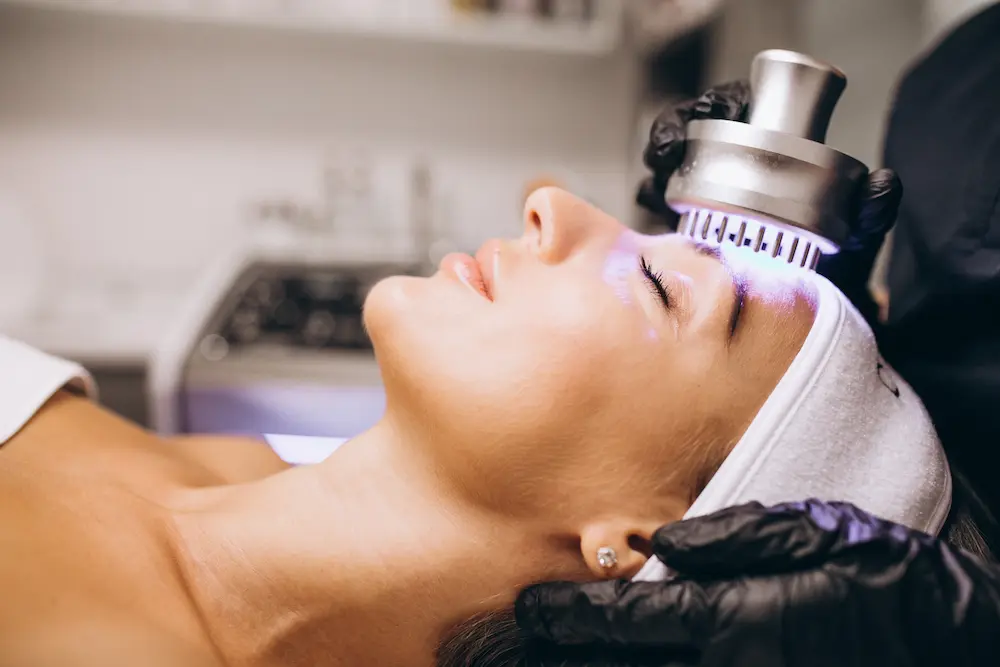
Not every acne scar responds in the same way.
Atrophic scars are depressed scars caused by loss of tissue beneath the skin. They may appear as narrow deep pits, wider rounded depressions, or shallow areas with uneven edges.
Fractional CO2 may be useful for certain types of atrophic acne scars, but deeper or tethered scars may need additional procedures.
For example, some patients may require subcision, microneedling, scar release techniques, or other treatments depending on the scar structure.
This is why the goal is not simply to “laser the scars.” The dermatologist first needs to identify what type of scar is present and whether a CO2 laser is suitable for that specific pattern.
Before-and-after photographs can be useful for tracking changes, but they should be interpreted carefully.
Improvements may include smoother-looking skin, softer scar edges, better overall texture, and reduced contrast between scars and the surrounding skin.
Results are not identical for every person.
Scar depth, skin tone, collagen response, number of sessions, treatment settings, age of the scars, and aftercare can all affect the outcome.
Standardised photographs taken under similar lighting and angles are more useful than heavily edited or filtered images.
Patients considering CO2 laser treatment should focus on realistic improvement rather than expecting every scar to disappear completely.
Fractional CO2 usually involves more recovery than many lighter cosmetic procedures.
Immediately after treatment, the skin may feel warm and appear red. Mild swelling can also occur.
Over the following days, the treated skin may become darker, rougher, or develop fine crusting before gradually settling.
Recovery time depends on how deeply the laser was used and the size of the treated area. Some patients may recover more quickly, while stronger settings can require a longer healing period.
During recovery, sun protection, gentle cleansing, moisturisation, and following the dermatologist's aftercare instructions are important.
Picking at crusts or using irritating products too early may increase the chance of complications.
Fractional CO2 can cause discomfort, so clinics generally use methods to make the procedure more tolerable.
A topical numbing cream may be applied before treatment. Cooling or other comfort measures may also be used depending on the treatment plan.
Patients may feel warmth, stinging, or a prickling sensation while the laser is being delivered.
The level of discomfort varies based on individual sensitivity, treatment intensity, and the area being treated.
A consultation before the procedure gives patients an opportunity to discuss previous pain sensitivity and understand how comfort will be managed.
Some scars respond better to a combination approach than to laser alone.
For example, depressed scars that are attached to deeper tissue may need subcision before resurfacing. Other scars may be treated with microneedling, chemical reconstruction techniques, injectables, or other dermatologist-selected procedures.
Treatment may also be performed in stages rather than combining everything during one visit.
The purpose of combination therapy is not to perform more procedures unnecessarily. It is to target different parts of the scar using the method best suited to each one.
At a professional skin clinic in Kochi or skin clinic in Tirur, scar treatment should be planned after examining scar depth, distribution, skin tone, and previous treatment history.
The improvement from fractional CO2 develops gradually because collagen remodelling continues after the skin surface has healed.
Some changes may become visible within weeks, while texture can continue to evolve over the following months.
The number of sessions required varies.
A person with mild texture irregularity may need fewer treatments than someone with deeper acne scars.
Maintenance treatment is not automatically necessary for everyone. The dermatologist may recommend additional sessions only if further improvement is likely and the skin has recovered sufficiently.
Long-term care also includes sunscreen use and appropriate skincare, particularly because sun exposure can make post-treatment pigmentation more noticeable in some skin types.
Fractional CO2 can be a useful option for selected acne scars and texture concerns, but successful treatment begins with choosing the right patient and the right settings.
At Sage Skin & Hair Clinic, scar and texture concerns can be evaluated according to scar type, skin tone, previous procedures, healing tendency, and individual goals before CO2 laser treatment is considered.
If you are looking for a skin clinic in Kochi, skin clinic in Tirur, or dermatologist-guided CO2 laser treatment, choose a clinic that focuses on careful assessment, realistic expectations, safe laser parameters, and structured aftercare.
For scar correction, the best result is usually not about making the skin look artificially perfect. It is about achieving meaningful improvement while protecting the health of the skin.


