Wellness
September 29, 2026
Managing unwanted body hair through shaving, waxing, or threading can become repetitive, especially when several areas need frequent attention. Full body laser hair removal offers a longer-term approach by targeting actively growing hair follicles and gradually reducing regrowth over a planned series of sessions.
For anyone searching for a skin clinic in Kochi, skin clinic in Tirur, or
dermatologist-supervised full body laser hair removal, understanding how the treatment works can help set realistic expectations before beginning.
Treating a small area such as the upper lip or underarms is different from planning laser sessions for several body regions together.
A full-body programme may include areas such as the arms, legs, underarms, abdomen, back, bikini region, or face depending on the patient's requirements. Each area can have a different hair thickness, density, growth speed, and sensitivity.
Because of these variations, the same laser parameters should not simply be applied everywhere.
A professionally planned session considers the characteristics of each treatment zone and adjusts the approach accordingly. This helps balance effectiveness with skin safety.

Laser hair removal is a process rather than a one-session solution.
Many people require a series of treatments before they notice substantial reduction. The exact number cannot be predicted identically for everyone because hair density, body area, hormonal influences, hair colour, and individual response all affect progress.
Some hairs may become finer and grow more slowly after several sessions, while others may require additional treatment.
It is also important to distinguish hair reduction from guaranteed permanent removal. Laser can significantly reduce unwanted hair, but occasional regrowth or future maintenance sessions may still occur.
A dermatologist can review progress between appointments and decide whether further sessions are worthwhile.
One reason laser sessions are spaced apart is that body hair does not grow simultaneously.
Individual follicles pass through different stages. Laser treatment is generally most effective when hair is in its active growth phase because the follicle contains more pigment that can absorb the laser energy.
At any given session, however, some follicles are resting or transitioning and may therefore respond less effectively.
Waiting between sessions allows another group of hairs to enter the appropriate stage for treatment.
This is why undergoing sessions too frequently does not necessarily produce faster results. Correct timing can be just as important as the laser itself.
Laser treatment requires careful selection of technology and settings, particularly in people with medium to deeper skin tones.
The laser targets pigment within the hair, but the surrounding skin also contains melanin. If inappropriate settings are used, there may be a greater risk of burns, irritation, or changes in skin colour.
Modern laser systems can be adjusted according to the patient's skin tone, hair thickness, and treatment area.
A test spot may sometimes be useful, particularly when treating sensitive areas or when there is uncertainty about how the skin may respond.
For people considering full body laser hair removal, choosing medically supervised treatment is especially important because different body areas may react differently even on the same person.
After a laser session, temporary warmth or mild redness can occur around the treated follicles. This usually settles, but the skin should still be treated gently.
Patients may be advised to avoid excessive heat, vigorous rubbing, strong exfoliants, and unnecessary sun exposure for a short period after treatment.
Regular moisturising and sunscreen on exposed areas may also be recommended.
Laser hair reduction can help some people who frequently experience ingrown hairs because there are fewer coarse hairs growing back over time. However, existing inflammation or infected bumps may need separate medical attention.
Avoiding waxing or plucking between sessions is also important because these methods remove the follicle target needed for the next laser treatment.
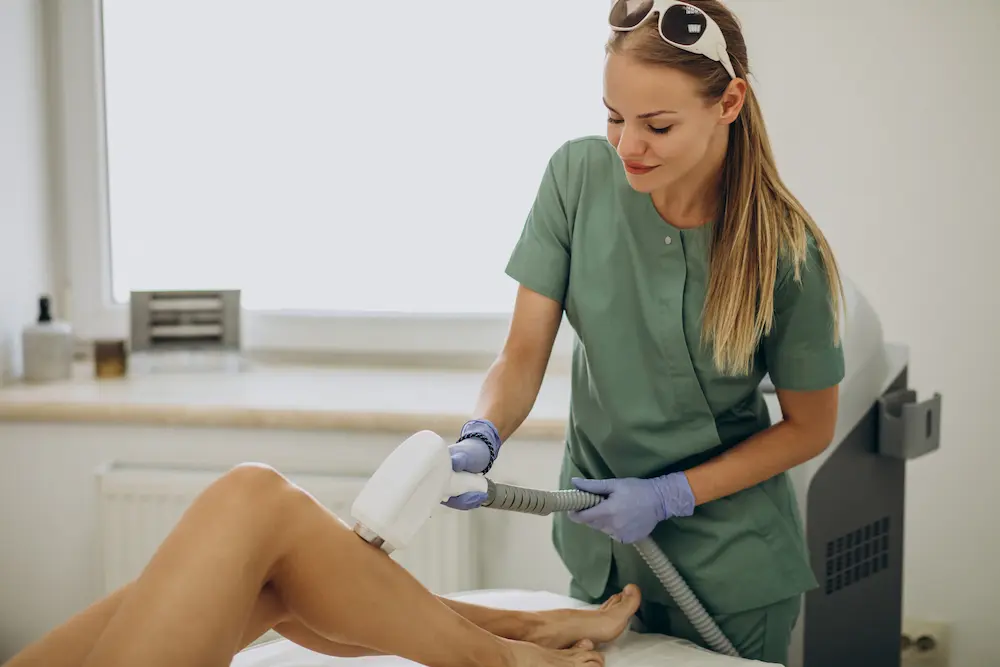
Shaving removes hair only from the surface, so regrowth can appear quickly. Waxing and epilation remove hair from the root but need to be repeated as new hair grows.
Laser works differently by directing energy towards the hair follicle during suitable growth stages, gradually reducing its ability to produce strong hair.
Electrolysis is another method used for long-term hair removal. It treats individual follicles using a fine probe, making it more practical for relatively small areas than for extensive body coverage.
For larger treatment areas, laser may offer a faster option because multiple follicles can be treated during each pulse.
The most appropriate choice depends on the treatment area, hair characteristics, skin tone, budget, and expected outcome.
A successful laser programme is not about using the highest possible energy or promising completely hair-free skin. The priority should be achieving gradual reduction while protecting the surrounding skin.
At Sage Skin & Hair Clinic, patients considering full body laser hair removal can be assessed according to skin tone, hair pattern, treatment areas, previous hair-removal methods, and individual requirements before sessions are planned.
If you are searching for a skin clinic in Kochi, skin clinic in Tirur, or professional full body laser hair removal, choose a clinic where treatment settings and session intervals are personalised rather than following the same protocol for every patient.
With appropriate technology, realistic expectations, and consistent sessions, laser treatment can make unwanted body hair finer, slower-growing, and easier to manage over time.


