Wellness
August 30, 2026
Few skincare ingredients receive as much attention as retinoids. They appear in everything from beginner anti-aging serums to prescription acne treatments, yet terms such as retinol, retinaldehyde, retinal, and tretinoin are often used as though they mean the same thing.
They do not.
Retinoids are a broad family of vitamin A-related compounds. Different members of this family vary in how they are formulated, how directly they act in the skin, how much clinical evidence supports their use, and how likely they are to cause irritation. Dermatologists use topical retinoids for concerns including acne and photoaging, while milder cosmetic retinoids are commonly found in non-prescription skincare.
For someone considering retinoid treatment or searching for the best skin clinic in Kochi, a skin clinic in Kochi, or the best skin clinic in Tirur, understanding these differences can make it easier to choose a routine that matches the skin rather than simply following the strongest product trend.
“Retinoid” is the umbrella term. Retinol, retinaldehyde and tretinoin belong within this larger group, but they are not interchangeable.
Retinol is widely used in cosmetic skincare products. After application, it must undergo metabolic conversion within the skin before reaching retinoic acid, the biologically active form.
Retinaldehyde, also called retinal, sits further along that conversion pathway. Clinical studies have shown that retinaldehyde formulations can improve features associated with photoaged skin, although effectiveness and tolerability depend on the formulation and concentration used.
Tretinoin is retinoic acid itself. Unlike cosmetic retinol, it does not need the same conversion steps before interacting with retinoic-acid receptors in the skin. It has been extensively studied for acne and photodamage and is used as a prescription medication.
This does not mean that everyone should automatically use tretinoin. A more powerful ingredient can also create more irritation if it is introduced incorrectly or used on unsuitable skin.
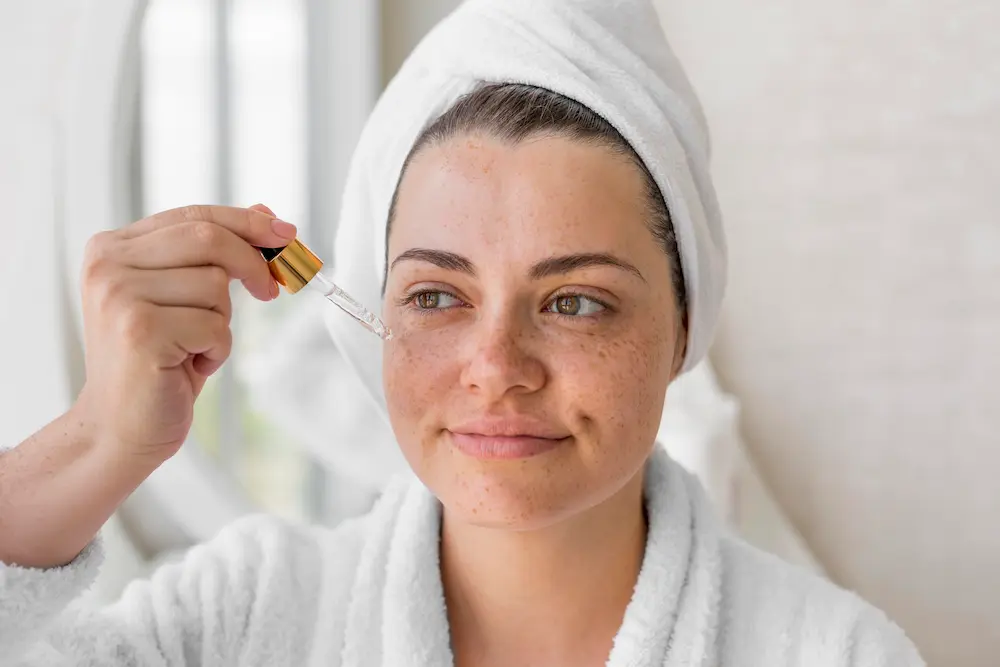
The best retinoid is not necessarily the strongest one.
For people starting an anti-aging routine, those with mild concerns, or individuals whose skin becomes irritated easily, a well-formulated retinol may offer a more gradual introduction. Controlled clinical research has found that topical retinol can improve features of aged or photodamaged skin, although results depend heavily on the specific formulation and consistent use.
Prescription retinoids may be considered when there is a medical indication such as acne or when a dermatologist determines that stronger therapy is suitable.
The American Academy of Dermatology specifically advises beginning with a less intense retinoid when appropriate and increasing use gradually rather than assuming tretinoin is automatically the correct starting point.
Skin type matters too.
A person with oily, acne-prone skin may have very different requirements from someone with eczema-prone, dry, or reactive skin. Existing medications, previous reactions, pregnancy, and the other active ingredients in the routine can also influence retinoid selection.
This is where personalised retinoid treatment becomes more useful than following a generic online routine.
Tretinoin has decades of clinical research behind its use in dermatology.
For acne, topical retinoids help prevent the formation of clogged pores and form an important component of dermatologist-directed acne management.
Tretinoin has also been studied extensively for photoaged skin. Clinical trials have demonstrated improvement in features such as fine wrinkling and other visible signs of photodamage after sustained treatment.
But stronger activity comes with a need for greater care.
Prescription information for topical tretinoin warns that it can cause dryness, redness, peeling, itching, burning, stinging, and other forms of local irritation. Importantly, applying larger amounts or using it more frequently than directed does not produce faster acne improvement and can instead increase irritation.
A dermatologist can select an appropriate formulation and frequency while considering acne activity, pigmentation tendency, sensitivity, barrier condition, and other products being used.
This is why prescription tretinoin should not be treated as simply a “strong retinol.”
People starting a retinoid sometimes experience an adjustment period commonly referred to as “retinization.”
The skin may initially become dry, tight, flaky, red, or mildly uncomfortable. These effects are well-recognised with topical tretinoin and other retinoids.
Trying to force the skin through severe irritation is not necessary.
A dermatologist may suggest reducing application frequency, using a suitable moisturiser, simplifying other active products, or modifying the retinoid depending on the severity of the reaction.
Beginning gradually is particularly useful. The AAD recommends that patients starting a retinoid may begin with less frequent nighttime application and increase according to tolerance.
Harsh scrubs, frequent exfoliating acids, abrasive cleansers, or several irritating treatments used at the same time can make tolerance more difficult.
Sun protection also becomes essential. Tretinoin prescribing information advises minimising unnecessary ultraviolet exposure and using appropriate sun-protective measures.
Severe burning, swelling, blistering, persistent dermatitis, or significant irritation should not simply be accepted as a normal adjustment phase.
Building a Retinoid Routine for Anti-Aging at Home A retinoid routine does not need to be complicated.
A simple evening structure may include gentle cleansing, allowing the skin to dry, applying the retinoid according to instructions, and following with an appropriate moisturiser.
For prescription tretinoin, follow the exact quantity and schedule advised by your dermatologist rather than copying another person's routine.
If using a cosmetic retinol or retinaldehyde product, introduce one new active at a time. This makes it easier to recognise irritation and understand how well the skin tolerates the formula.
During the daytime, use broad-spectrum sun protection consistently. Retinoid use should never become an excuse to ignore one of the most important steps in preventing photodamage.
Also avoid the idea that peeling equals effectiveness.
A product can be working without making the face visibly shed skin. Excessive peeling often signals irritation rather than superior results.
People who are pregnant should also discuss skincare with their healthcare professional. The American Academy of Dermatology recommends avoiding retinoids, including prescription tretinoin and cosmetic retinol products, during pregnancy.
Over-the-counter availability can make retinoids appear simple, but selecting the wrong formulation or combining too many active ingredients can leave the skin chronically irritated.
Professional guidance becomes particularly useful if you have persistent acne, pigmentation, melasma, highly sensitive skin, eczema-prone skin, recurring irritation, or if previous retinoid attempts have caused significant redness and peeling.
A consultation at a skin clinic in Kochi or the best skin clinic in Tirur can also help determine whether your concern genuinely requires a retinoid or whether another treatment would be more appropriate.
At Sage Skin & Hair Clinic, retinoid guidance can be personalised according to skin type, acne activity, pigmentation, sensitivity, existing skincare, treatment history, and individual goals.
Retinol, retinaldehyde, and tretinoin are related, but choosing between them should not become a competition over which product sounds strongest.
Retinol can provide a gentler entry into vitamin A-based skincare. Retinaldehyde offers another cosmetic option with clinical evidence for photoaging, while tretinoin is a prescription retinoid with extensive evidence and a greater potential for irritation when used incorrectly.
If you are searching for the best skin clinic in Kochi, best skin clinic in Tirur, or professional retinoid treatment, the goal should be to find the formulation and routine your skin can tolerate consistently.
At Sage, effective retinoid care is not about prescribing the strongest option to everyone. It is about balancing evidence, skin tolerance, medical need, and long-term skin health.
With retinoids, consistency and correct use usually matter more than intensity.


