Wellness
November 25, 2026
Why Your Pores Look Dark and Bumpy, and How to Fix Them Have you ever shaved your legs, expecting smooth, clear skin, only to notice tiny dark dots scattered across the surface? They almost look like the seeds on a strawberry. No matter how carefully you shave or moisturise, those little spots seem to stick around.
If this sounds familiar, you may be dealing with something commonly called strawberry skin.
It's a surprisingly common skin concern, especially on the legs and arms. While those dark dots can be frustrating, they are usually harmless. The challenge is figuring out what's causing them, because not every case of strawberry skin is the same.
From simple skincare changes to professional dermatological treatments, several approaches can help improve skin texture and appearance.
Let's understand why strawberry skin happens, how it differs from other skin conditions, and what you can do to manage it.
Strawberry skin isn't an official medical diagnosis. It's a popular term used to describe skin that has tiny dark dots, visible pores, or small bumps resembling the surface of a strawberry.
These dots are most commonly noticed on the legs, although they can also appear on the thighs, upper arms, and other areas where hair grows.
The appearance may result from visible hair follicles, clogged pores, trapped hairs, or certain inflammatory skin conditions.
Sometimes the spots look brown or black. In other cases, they appear reddish and feel slightly rough when you run your hand over the skin.
One important thing to understand is that strawberry skin doesn't automatically mean your skin is unhealthy or dirty. Hair follicles are a normal part of the skin, and their visibility varies from person to person.
The goal of treatment isn't to eliminate pores or follicles, which isn't possible, but to address the underlying cause and improve the skin's appearance.
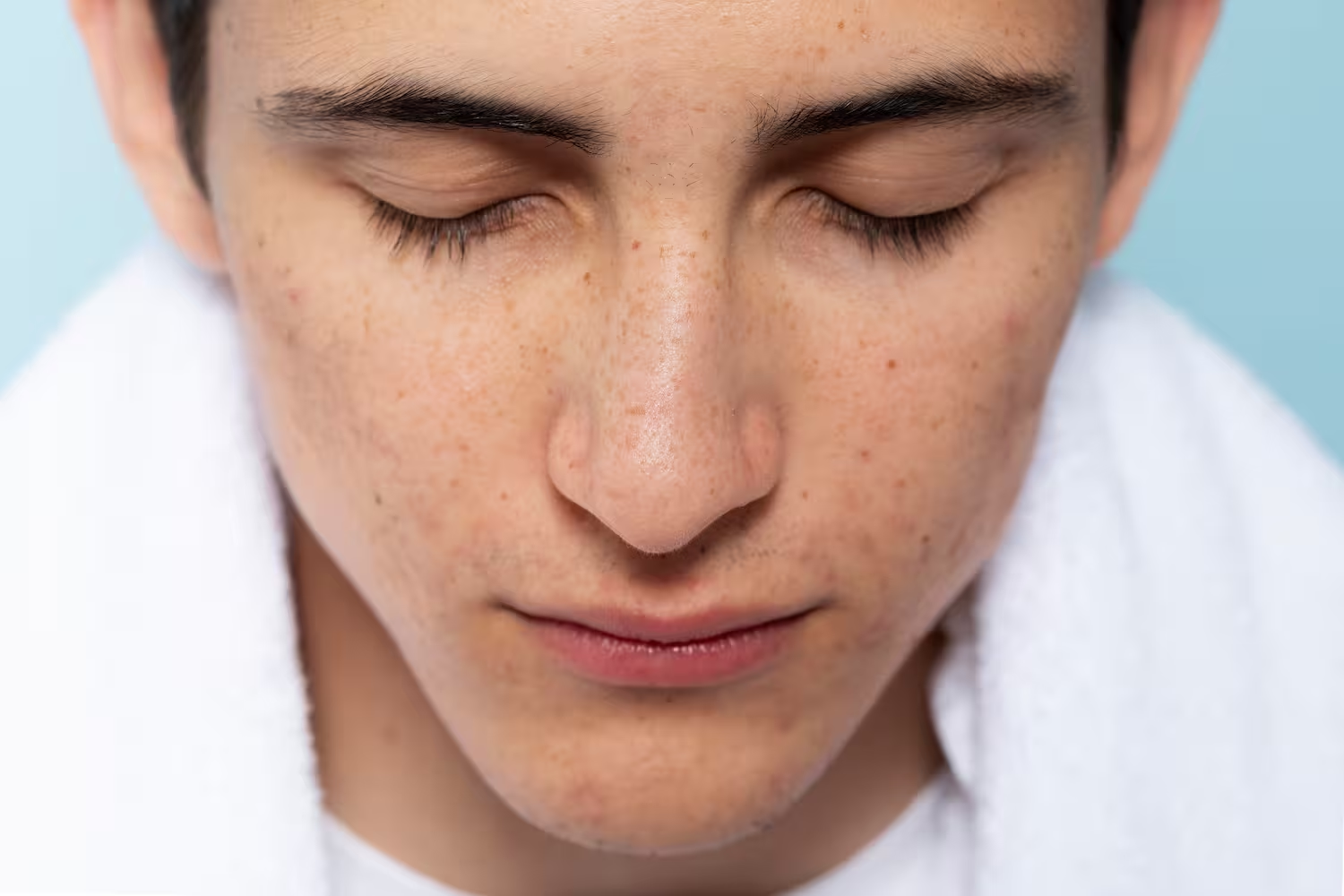
Although they can look similar, strawberry skin, keratosis pilaris, and folliculitis aren't necessarily the same condition.
Understanding the difference matters because each responds to a different approach. Strawberry Skin
This term generally describes the appearance of dark follicular dots, often becoming more noticeable after shaving.
The spots may be flat or slightly raised. Depending on the cause, the skin can feel completely smooth or mildly rough.
Keratosis Pilaris
Keratosis pilaris is a common condition caused by a buildup of keratin, a protein naturally found in the skin.
When keratin plugs hair follicles, small, rough bumps develop. These commonly appear on the upper arms, thighs, buttocks, and sometimes the cheeks.
The bumps often feel like sandpaper or goosebumps and may become more noticeable when the skin is dry.
Keratosis pilaris is harmless and isn't contagious, but it can persist or return even after treatment.
Folliculitis
Folliculitis occurs when hair follicles become inflamed, sometimes due to infection, friction, or shaving.
Unlike ordinary visible pores, folliculitis may cause red, tender, itchy, or pus-filled bumps.
Because bacterial, fungal, and non-infectious folliculitis can require different treatments, persistent or painful symptoms should be evaluated by a dermatologist.
Strawberry skin doesn't have one single cause. Several everyday factors may contribute to its appearance.
1. Shaving and ingrown hairs
Shaving cuts hair close to the skin surface. In some people, the remaining hair shaft may appear as a dark dot inside the follicle.
Hair can also curl back into the skin, leading to ingrown hairs, irritation, and bumps. 2. Clogged hair follicles
Dead skin cells, excess oil, and keratin can collect around follicular openings, making them appear more prominent.
When material inside an open follicle is exposed to air, oxidation can sometimes contribute to a darker appearance.
3. Dry skin
Dryness can make roughness and tiny bumps more noticeable. It is also closely associated with keratosis pilaris.
4. Friction and tight clothing
Repeated rubbing from tight clothing, exercise wear, or shaving can irritate follicles and contribute to inflammation.
5. Post-inflammatory pigmentation
After shaving irritation, ingrown hairs, or folliculitis heals, darker marks may remain, particularly in skin that is prone to hyperpigmentation.
Understanding which factor is responsible helps you choose skincare that actually addresses the problem.
The good news is that mild strawberry skin and keratosis pilaris can often improve with consistent home care.
But there's a catch: treating the skin too aggressively can make things worse. Choose gentle chemical exfoliation
Products containing lactic acid, glycolic acid, or salicylic acid may help loosen dead skin cells and reduce the appearance of clogged follicles.
Start with a low-strength formulation a few times a week, depending on your skin's tolerance, rather than applying multiple exfoliating products every day.
Avoid using exfoliating acids immediately after shaving or on broken, inflamed skin. Moisturise every day
A good moisturiser is one of the simplest ways to manage rough, bumpy skin.
Look for ingredients such as:
- Ceramides: Help support the skin's protective barrier.
- Glycerin: Attracts moisture and helps prevent dryness.
- Urea: Hydrates and, at suitable concentrations, softens rough skin.
- Lactic acid: Provides gentle exfoliation in appropriately formulated moisturisers. Apply moisturiser after bathing while your skin is still slightly damp.
Avoid harsh scrubbing
Rough loofahs, abrasive body scrubs, and aggressive exfoliating gloves can create irritation.
Gentle cleansing, regular moisturising, and patience generally work better than trying to scrub the dots away.
Visible improvement may take several weeks, and maintenance is often necessary.
If you've followed a consistent skincare routine but the dark dots and bumps remain, professional treatment may help.
A dermatologist will first examine your skin to determine whether the problem is caused by keratosis pilaris, ingrown hairs, pigmentation, or folliculitis.
Chemical Peels
Professionally selected chemical peels may help improve rough texture and certain types of superficial pigmentation.
However, not every peel is suitable for every skin type. Strong formulations can cause irritation or worsen pigmentation, especially if the skin is already inflamed.
Laser Hair Reduction
If recurringingrown hairs or shaving-related irritation are causing strawberry skin, laser hair reduction may be an option.
By reducing hair growth, laser treatment can help minimise shaving-related bumps over time. Multiple sessions are generally required, and results depend on factors such as hair colour, skin tone, and the technology used.
Prescription Creams
Dermatologists may recommend topical retinoids or other medicated creams to help manage keratin buildup and roughness.
For folliculitis, treatment depends on whether inflammation, irritation, or infection is responsible.
A consultation at a skin clinic in Kochi or Tirur can help identify suitable treatments instead of relying on repeated trial and error.
American Academy of Dermatology+1
Shaving and waxing don't always cause strawberry skin, but they can make existing bumps and dark spots more noticeable.
Shaving too closely, using a dull razor, or repeatedly passing the blade over the same area can irritate hair follicles.
Waxing may also trigger inflammation or ingrown hairs in people with sensitive skin.
If you frequently develop bumps after hair removal, try shaving in the direction of hair growth, using a clean, sharp razor and a moisturising shaving gel.
Avoid shaving over irritated skin, and give your skin time to recover between sessions.
For people who repeatedly experience razor bumps, switching to an electric trimmer or discussing laser hair reduction with a dermatologist may be helpful.
Cleveland Clinic+1
Managing strawberry skin is less about finding one miracle product and more about developing a routine your skin can tolerate.
Keep your daily skincare simple. Use a gentle body cleanser, avoid excessively hot showers, and moisturise regularly.
Introduce exfoliating ingredients gradually rather than combining several strong products at once. If your skin becomes red, dry, or sensitive, reduce exfoliation and focus on restoring moisture.
Apply sunscreen to exposed areas, particularly when using exfoliating products, to help prevent pigmentation from becoming darker.
Most importantly, remember that natural skin texture is normal. Even healthy skin has visible follicles, pores, and occasional bumps.
If the spots become painful, spread quickly, develop pus, or fail to improve despite consistent care, consult a dermatologist.
Give Your Skin the Care It Deserves
Strawberry skin may be common, but that doesn't mean you have to keep guessing about the cause.
Whether you're dealing with keratosis pilaris, recurring ingrown hairs, or rough and uneven skin texture, identifying the underlying condition is the key to choosing an effective approach.
If you're searching for the best skin clinic in Kochi or the best skin clinic in Tirur for your concerns, consider factors such as qualified dermatologists, appropriate treatment options, and personalised care.
At Sage Skin & Hair Clinic, patients can seek professional guidance for skin concerns and explore treatment options suited to their individual needs.
Smooth-looking, healthy skin begins with the right care, consistent habits, and realistic expectations.


