Wellness
August 31, 2026
A tattoo may represent an important period of life when it is created, but preferences, careers, relationships, and personal circumstances can change. When that happens, covering a tattoo is not the only option. Modern laser tattoo removal can gradually lighten or, in suitable cases, substantially remove unwanted tattoo pigment through a series of carefully planned treatments.
Tattoo removal, however, is more complex than simply directing a laser at the skin. Ink colour, depth, density, tattoo age, location, skin tone, previous scarring, and the technology being used can all influence the outcome. The American Academy of Dermatology notes that factors such as tattoo colour, depth, location, health, medications, and history of raised scars should be considered before treatment begins.
For someone considering a skin clinic in Kochi or skin clinic in Tirur, a medical assessment before laser treatment can help establish realistic expectations and determine an appropriate removal strategy.
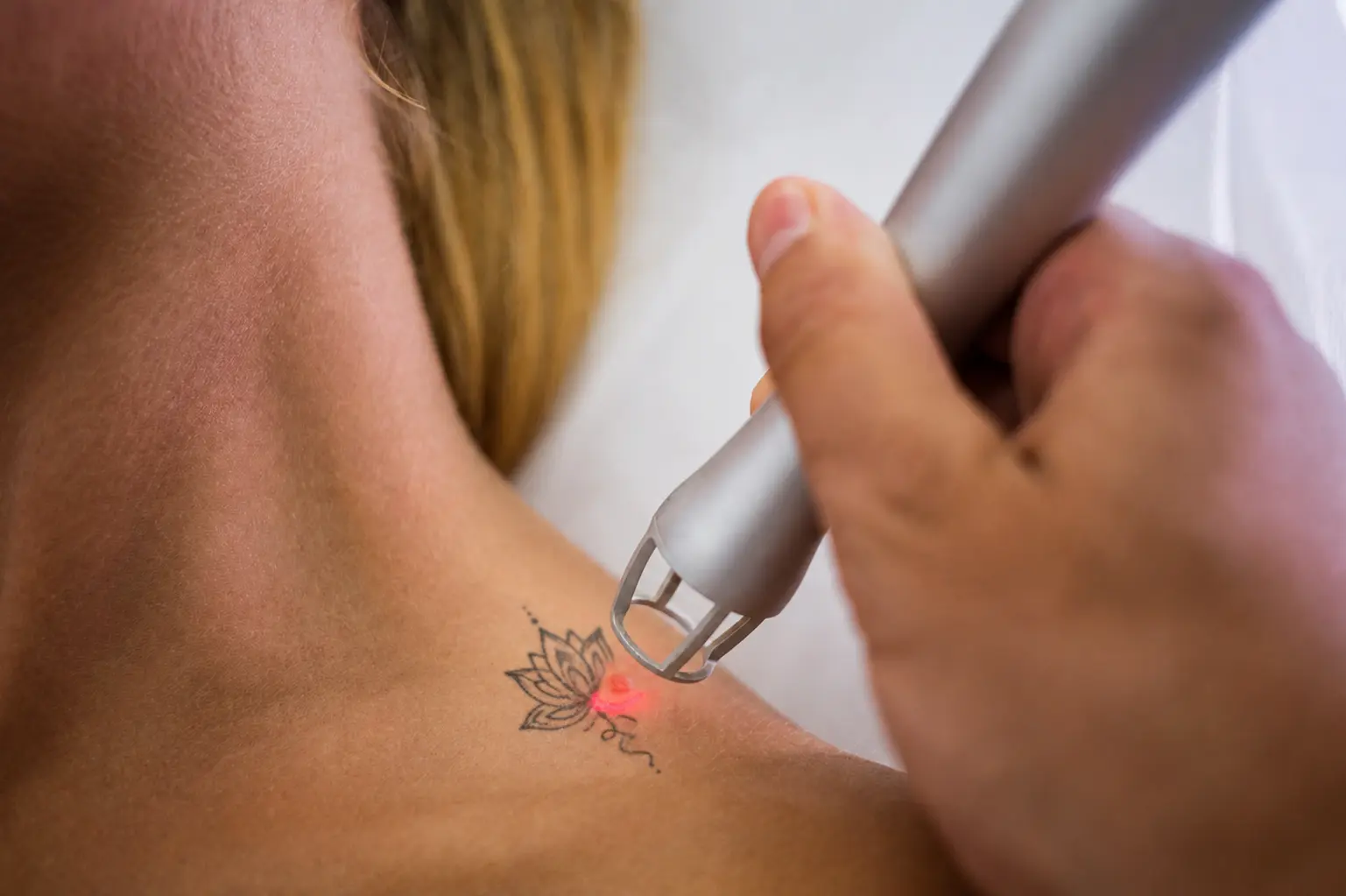
A permanent tattoo stays visible because pigment particles are deposited within the dermis, the deeper layer beneath the epidermis. Unlike surface colour that can simply be washed or exfoliated away, these particles remain embedded within the skin.
Laser tattoo removal works by delivering very short bursts of concentrated light energy to tattoo pigment.
Different inks absorb specific wavelengths of light. When suitable laser energy is absorbed by tattoo particles, the pigment breaks into much smaller fragments. The laser does not simply “erase” the tattoo during the appointment. Instead, the body's immune processes gradually clear some of those fragmented particles over the following weeks.
This explains why a tattoo normally becomes lighter progressively rather than disappearing after one sitting.
It also explains why adequate gaps between sessions matter. The skin needs time to recover, while the body continues processing fragmented pigment between treatments.
Not every tattoo responds to the same wavelength or laser system.
Q-switched Nd:YAG lasers have been widely used for tattoo removal. The 1064 nm wavelength is particularly useful for darker pigments such as black and certain dark blue inks, while other wavelengths can be selected for different pigment colours. Research also supports the use of Q-switched Nd:YAG technology in darker skin types when appropriate parameters are chosen carefully.
Picosecond lasers deliver energy in extremely short pulses. This short pulse duration can create strong photoacoustic effects that fragment tattoo pigment into smaller particles. Systematic reviews suggest that picosecond technology can be effective for tattoo removal, including some colours that traditionally respond less easily, although outcomes still depend on wavelength, ink composition, skin type, and treatment technique.
Fractional laser technology works differently and should not automatically be considered a direct substitute for pigment-targeting tattoo lasers. Fractional or ablative approaches may sometimes have an adjunctive role in selected resistant tattoos or associated textural concerns, but ablative methods generally carry greater potential for scarring and unwanted cosmetic changes when used as primary tattoo-removal methods.
The ideal technology therefore depends on the individual tattoo rather than simply choosing the newest machine available.
Colour is one of the biggest variables in laser tattoo removal.
A laser works effectively only when the tattoo pigment absorbs its wavelength. Since different pigments interact differently with light, one wavelength cannot reliably treat every colour. Multi-coloured tattoos may therefore require more than one laser wavelength during the overall treatment course.
Black ink commonly responds well because it absorbs a broad range of laser wavelengths. Dark blue may also respond relatively well to certain systems.
Green, yellow, red, turquoise, and other bright pigments can be more complicated depending on their chemical composition and the available wavelength. FDA guidance specifically notes that green, red, and yellow can be among the more difficult colours, whereas black and dark blue are generally easier to target.
Newer picosecond systems have improved treatment possibilities for colours such as blue and green, although no laser guarantees complete removal of every pigment.
White, flesh-toned, and some cosmetic tattoo pigments require additional caution because laser exposure can sometimes cause unexpected darkening through pigment oxidation.
This is why the colours within a tattoo should be evaluated before treatment begins.
Two tattoos of exactly the same size may respond very differently.
Professional tattoos are often created using greater pigment density and more consistent ink placement. Multiple colours and layered pigment may also be present. These characteristics can make removal more complex and may require repeated treatment.
Amateur tattoos can sometimes contain less pigment or have a more irregular depth, potentially allowing some areas to lighten more quickly. However, “amateur” does not automatically mean easy to remove.
Ink composition, how deeply the needle penetrated, previous attempts at removal, scarring, tattoo location, and the person's individual response can all influence the result.
The AAD specifically advises assessing tattoo depth, colours, location, age, and the patient's medical history before establishing expectations.
At Sage, the starting point for treatment should therefore be the actual tattoo and skin—not simply whether the tattoo came from a professional studio or was done informally.
One of the most important expectations to establish is that tattoo removal is a process rather than a single-day procedure.
Tattoo pigment may be deposited in layers, and trying to destroy all of those layers aggressively in one session could unnecessarily injure the surrounding skin. The AAD explains that lasers cannot safely break down all tattoo layers during one treatment and that intervals are required for skin healing and pigment clearance.
The total number of sessions can vary considerably.
Tattoo size, pigment density, colours, location, ink depth, skin characteristics, previous treatment, and individual healing can all affect how quickly the tattoo fades. Complete removal is not always achievable, and some tattoos may retain a faint residual appearance even after multiple treatments.
Rather than promising an exact number during the first consultation, a dermatologist can monitor fading from session to session and adjust the plan accordingly.
A gradual approach is often preferable to using excessive laser energy simply to try to shorten the process.
What happens after each laser session is just as important as what happens during it.
Temporary redness, swelling, soreness, pinpoint bleeding, or mild blistering can occur after treatment. Pigmentary changes, including temporary darkening or lightening of the treated skin, may also occur. Scarring and infection are recognised potential complications, particularly when treatment or aftercare is inappropriate.
Follow the aftercare instructions provided by the treating dermatologist. The area may need gentle cleansing, moisturising, protection while it heals, and avoidance of picking at crusts or blisters.
Sun protection is particularly important because recently treated skin may be more vulnerable to pigment changes. The AAD recommends protecting treated areas from sun exposure during the healing period and following the dermatologist's individual aftercare advice.
Trying tattoo-removal creams, strong acids, salt scrubbing, or home removal methods should also be avoided. The FDA reports that tattoo-removal creams are not proven to remove pigment located in the deeper dermis and may instead cause burns, rashes, or scars.
Effective tattoo removal is not simply about using the highest laser power.
Successful treatment requires choosing an appropriate wavelength, understanding pigment behaviour, protecting the surrounding skin, allowing adequate recovery time, and adjusting each session according to how the tattoo responds.
If you are looking for a skin clinic in Kochi or skin clinic in Tirur for laser tattoo removal, a professional evaluation can help determine the tattoo's colours, depth, density, skin response, and suitable treatment strategy before starting.
At Sage Skin & Hair Clinic, tattoo-removal planning can be personalized according to the tattoo and the patient's skin rather than following a standard protocol for every case.
The aim is not aggressive removal at any cost. It is controlled, progressive fading while protecting the health and appearance of the surrounding skin.


