Wellness
August 19, 2026
Clear-looking skin is not defined by having one perfectly uniform colour. Natural variations are normal. The concern begins when patches, dark marks, dull areas, roughness,
enlarged-looking pores, or irregular texture become noticeably different from the surrounding skin.
For some people, unevenness develops after acne. For others, prolonged sun exposure, inflammation, pigmentation disorders, environmental stress, or inappropriate skincare may contribute. Often, more than one issue is present at the same time.
This is why an effective skin tone treatment should begin by identifying whether the visible unevenness comes mainly from pigment, texture, inflammation, or a combination of these concerns.
If you are considering a skin clinic in Kochi or a skin clinic in Tirur, understanding these differences can help you approach treatment with more realistic expectations.
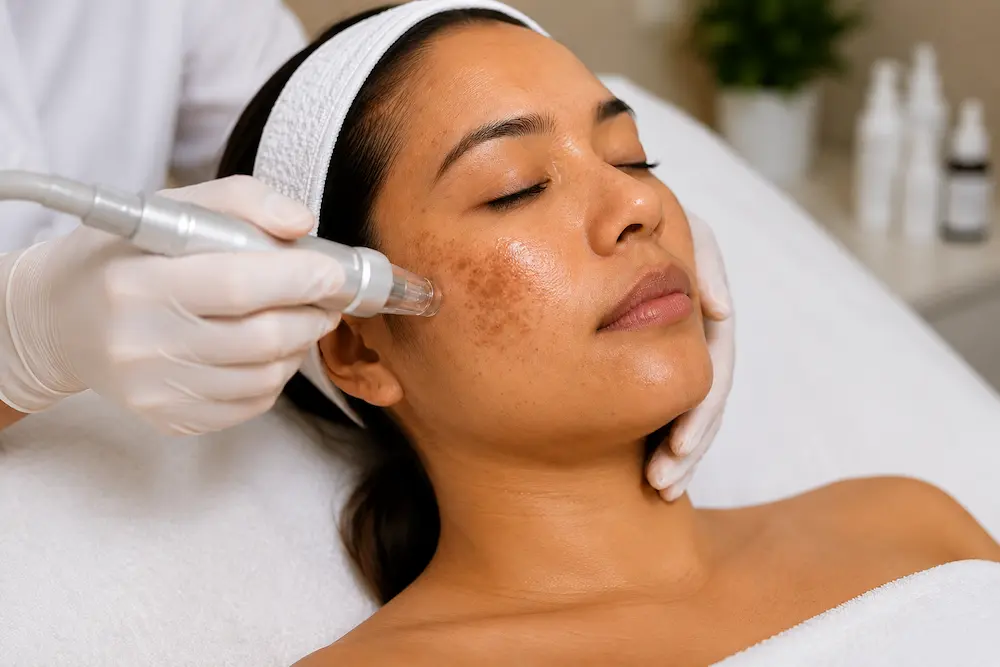
Uneven skin is often used as a broad description, but tone and texture are two different concerns.
Uneven tone refers primarily to variations in colour. This may appear as brown patches, dark spots after acne, areas of increased pigmentation, or lighter patches. Conditions such as melasma and post-inflammatory hyperpigmentation can contribute to visible colour differences.
Texture, on the other hand, describes how the surface of the skin looks and feels. Rough patches, acne scars, irregular pores, fine lines, bumps, and surface changes can make skin appear less smooth even when pigmentation is relatively even.
The distinction matters because treating pigmentation alone will not necessarily improve an indented acne scar, while resurfacing a rough area may not address the biological process producing excess pigmentation.
A dermatologist therefore needs to look beyond the general complaint of “uneven skin” and determine which layer of the problem needs attention.
Daily environmental exposure can gradually influence both colour and texture.
Ultraviolet radiation is one of the most important contributors to photoaging. Chronically sun-exposed skin can develop pigmentation changes and structural alterations over time. Sunlight can also stimulate pigmentation and aggravate conditions such as melasma.
This is especially relevant in a tropical setting where outdoor UV exposure may occur throughout much of the year.
Air pollution is another factor being studied in relation to skin aging and pigmentation. Research has linked exposure to particulate pollution with oxidative stress and changes associated with premature skin aging, including pigmentary changes.
Heat, sweat, humidity, frequent cleansing, and the repeated use of strong skincare products may add another layer of irritation for susceptible skin.
For people living in Kerala, maintaining even-looking skin is therefore not simply about treating an existing dark spot. Daily protection against environmental stress is an important part of preventing new unevenness.
Sometimes the acne disappears, but its visual reminder remains.
After an inflammatory pimple settles, the affected area may develop a flat dark mark known as post-inflammatory hyperpigmentation, or PIH. These marks are particularly common and often more noticeable in medium-to-deeper skin tones. Importantly, PIH is different from a true acne scar.
Acne can also produce actual textural scarring. Depending on how the skin heals, this may appear as depressions, uneven contours, or raised scars.
That creates two possible concerns following the same breakout: a difference in colour and a difference in surface structure.
Skin inflammation caused by dermatitis, injuries, burns, or certain procedures can also be followed by pigmentation changes.
This is one reason aggressive self-treatment can be counterproductive. Continually picking acne, scrubbing dark marks, or applying inappropriate high-strength products may increase irritation rather than create faster improvement.
A well-planned skin tone treatment should first control ongoing inflammation and then address what remains.
Many people do not fall neatly into a single treatment category.
Someone may have active acne, brown post-acne marks, shallow scars, and uneven texture simultaneously. Another person may have sun-related pigmentation together with roughness and early signs of photoaging.
Treating every concern at once with the strongest possible approach is not necessarily the best strategy.
The skin first needs to be assessed for active inflammation, sensitivity, pigmentation tendency, existing scars, skin type, current products, and previous procedures.
For example, when acne continues to produce new lesions, managing the active acne is important because every new inflammatory breakout can potentially leave another mark. Dermatologists also advise avoiding picking or squeezing acne because additional inflammation or injury can worsen post-acne problems.
Once the skin is stable, tone and texture can be approached more systematically.
The objective is not to make the skin artificially flawless. It is to reduce distracting irregularities while preserving healthy skin function and natural characteristics.
There is no single procedure that qualifies as the universal solution for uneven skin. Treatment needs to match the diagnosis.
Depending on the cause, a dermatologist may consider prescription or dermatologist-guided topical treatments for pigmentation, acne management, carefully selected chemical peels, resurfacing procedures, microneedling, laser-based treatments, or combinations performed at appropriate intervals.
Not every option is suitable for every skin type.
This is particularly important when treating pigmentation-prone skin because irritation itself can sometimes trigger further post-inflammatory pigmentation.
The sequence of treatment therefore matters.
A patient with active acne and pigmentation, for instance, may need inflammation controlled before more intensive scar-focused procedures are considered. Someone with melasma may need strict photoprotection integrated into the treatment plan because sunlight can contribute to recurrence or worsening.
At Sage Skin & Hair Clinic, an individual assessment can help determine whether the priority is pigmentation control, acne management, texture improvement, barrier support, resurfacing, or a carefully planned combination.
For patients looking for a skin clinic in Kochi or a skin clinic in Tirur, this personalized approach is more useful than selecting a treatment purely because it is trending online.
Improvement in skin tone and texture is only part of the process. Maintaining the result requires consistent everyday care.
Sun protection should form the foundation of the routine, particularly when pigmentation is a concern. Dermatologists commonly recommend broad-spectrum sunscreen of SPF 30 or higher as part of pigmentation management.
Cleansing should also remain gentle. Scrubbing harder does not remove deeper pigmentation and can unnecessarily irritate the skin.
Introduce active skincare according to your skin's tolerance rather than layering several acids, retinoids, brightening products, and exfoliants together without guidance.
Moisturisation is equally valuable when the skin feels dry or compromised. A stable skin barrier makes it easier to follow a long-term skincare routine without repeatedly triggering irritation.
Most importantly, control the original cause. If acne keeps returning, pigmentation treatment alone becomes an endless cycle. If sun exposure continues without adequate protection, treated patches may become visible again.
Creating Better Skin Through Consistency
Uneven skin tone is rarely just one dark spot, and rough texture is rarely solved by one facial or product.
Successful treatment begins by asking the right question: Is the concern pigment, texture, inflammation, scarring—or several of these together?
Once that is clear, treatment becomes more precise.
If persistent pigmentation, post-acne marks, roughness, or irregular texture is affecting your skin, consulting a dermatologist at a skin clinic in Kochi or skin clinic in Tirur can help identify the underlying causes and create an appropriate treatment plan.
At Sage Skin & Hair Clinic, skin tone treatment can be planned according to your skin type, pigmentation pattern, texture concerns, acne history, sensitivity, and individual goals.
The aim is not artificial perfection. It is healthier-looking skin with improved balance, smoother texture, and a routine that helps preserve those results over time.


